

Home Fall Prevention Checklist: Creating a Safer Bathroom and Living Space
Falls can have more than one contributing factor. The Centers for Disease Control and Prevention identifies walking and balance difficulties, certain medicines, vision problems, footwear, uneven steps, throw rugs, clutter, and other home hazards among the factors that may contribute to fall risk.
This room-by-room checklist helps older adults, family members, and caregivers review common environmental hazards and product-fit considerations. A home review cannot eliminate every fall risk or replace an individualized assessment from a qualified healthcare professional.
Quick Home Safety Checklist
- Keep floors, hallways, and doorways clear of clutter, cords, and unstable rugs.
- Provide adequate lighting in bedrooms, bathrooms, hallways, entrances, and stairways.
- Make sure stair handrails, bathroom grab bars, and other supports are securely installed.
- Keep frequently used items within comfortable reach.
- Review the dimensions, weight capacity, fit, and intended environment of mobility and bathroom-safety products.
- Discuss falls, near falls, dizziness, new weakness, or changing mobility with a qualified healthcare professional.
1. Review the Bathroom
Water, soap residue, floor transitions, and limited space can make bathroom movement more difficult. Review the complete route into, through, and out of the bathroom rather than focusing on one product alone.
Floors and Walking Surfaces
- Keep floors as dry as reasonably possible and address leaks promptly.
- Use non-slip surfaces or mats designed for the specific wet area, and make sure they lie flat and remain secure.
- Remove loose rugs or secure them so they do not slide, curl, or create a raised edge.
- Keep towels, clothing, cords, and personal-care items out of walking paths.
Grab Bars and Hand Supports
- Use grab bars designed for bathroom support and have them properly anchored.
- Do not treat towel bars, soap dishes, shower doors, or movable furniture as weight-bearing supports.
- Position frequently used items so the user does not need to overreach or twist unexpectedly.
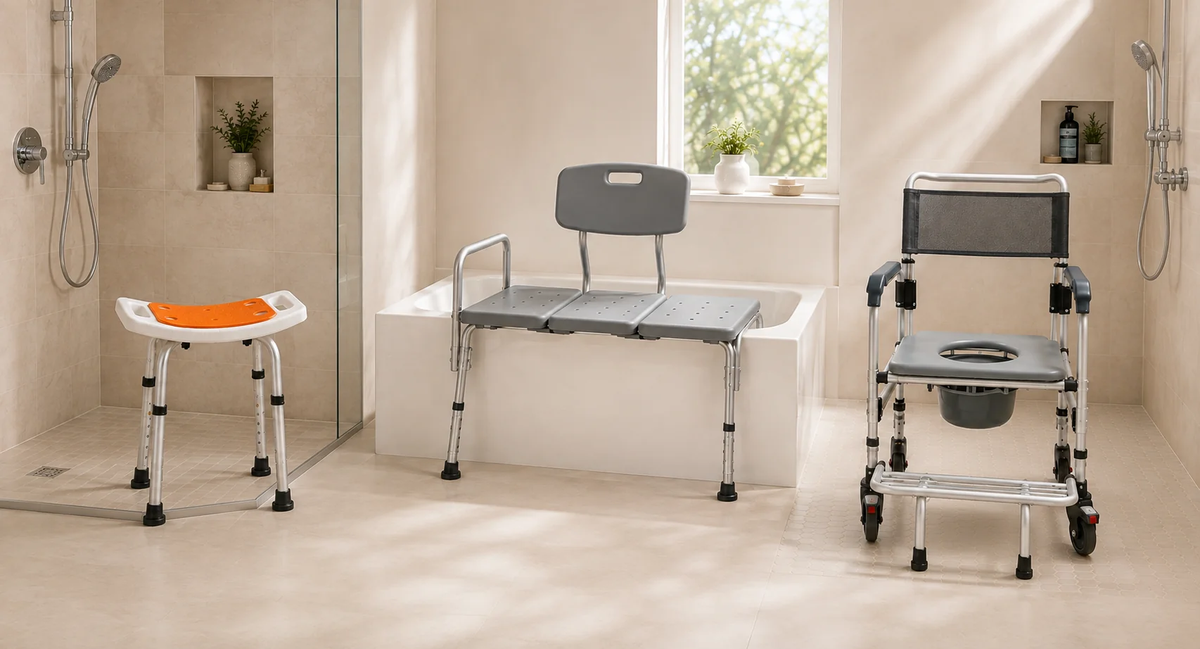
Shower Chairs, Stools, and Transfer Benches
- Confirm that the product is intended for the available space and bathing arrangement.
- Check the stated maximum user weight and all product dimensions before purchase.
- Before every use, make sure all feet contact the floor, adjustable legs are set correctly, and knobs or fasteners are secure.
- Do not use a chair, stool, or bench that rocks, slides, has missing parts, or appears damaged.
- If safe transfers or seat height are uncertain, seek guidance from a qualified healthcare professional or occupational therapist.
2. Clear Living Rooms, Bedrooms, and Hallways
Walking routes should provide enough clear space for the user, any mobility aid, and any required caregiver assistance.
- Move electrical cords, boxes, pet items, and low furniture out of regular pathways.
- Remove unstable throw rugs or secure rug edges appropriately.
- Arrange furniture so users do not need to make abrupt turns or squeeze through narrow gaps.
- Use stable chairs that do not roll or tip during sitting and standing.
- Place phones, lights, and frequently used items where they can be reached without climbing or overreaching.
3. Improve Lighting and Visibility
- Provide accessible light switches near room entrances.
- Use suitable night lighting along routes between the bedroom and bathroom.
- Reduce glare where possible and replace failed bulbs promptly.
- Make changes in floor level, steps, and thresholds easier to see.
- Discuss changing vision with an appropriate healthcare or eye-care professional.
4. Inspect Stairs and Entrances
- Keep stairs free from stored objects, cords, and loose materials.
- Make sure steps are even, well maintained, and adequately lit.
- Check that handrails are secure and available where needed.
- Repair loose flooring, unstable thresholds, and damaged outdoor walking surfaces.
- Keep entrances clear and account for rain, snow, ice, or other changing surface conditions.
5. Confirm Mobility-Aid Fit and Compatibility
A cane, walker, or rollator should not be selected only by appearance, price, or convenience. The appropriate type and fit depend on the user’s strength, balance, gait, environment, and required level of assistance.
- Follow the product manual and any individualized fitting guidance from a qualified professional.
- Measure the narrowest clear opening of doorways and hallways, then compare it with the product’s overall width.
- Allow enough room for turning, braking, transferring, and caregiver assistance.
- Check the maximum user weight, handle-height range, seat dimensions, wheel design, and intended surfaces.
- Inspect brakes, tips, wheels, fasteners, and frame components regularly.
- Use a built-in seat only when the product is designed for seating, positioned on a firm and level surface, and secured according to its instructions.
- Do not use a rollator or walker on stairs unless the product is expressly designed and labeled for that use.
6. Watch for Changes That Need Professional Attention
Environmental changes and support products address only part of fall risk. Contact a qualified healthcare professional when a user experiences a fall, repeated near falls, dizziness, new weakness, pain, difficulty transferring, changing vision, medication-related concerns, or a noticeable change in walking or balance.
A physical therapist or occupational therapist may be able to assess mobility, product fit, transfers, and the home environment based on the individual user’s needs.
Caregiver Review Before Use
- Read the complete product manual and retain it for future reference.
- Confirm that assembly and adjustments match the instructions.
- Do not exceed weight limits or use a product outside its intended purpose.
- Provide assistance when the user cannot safely operate, transfer with, or inspect the product independently.
- Stop using any product that is loose, damaged, unstable, or missing parts.
Smart NFC and Product Support
Selected DeepTireh products include Smart NFC access to setup information, registration, and support resources. These resources can make product information easier to locate, but they do not monitor the user, provide emergency assistance, or replace the product manual or professional guidance.
Frequently Asked Questions
What height should a shower chair or stool be?
There is no single correct height for every user. Follow the product instructions and confirm that the seat is stable, all adjustable legs are secured correctly, and the user can sit, stand, and transfer as safely as possible. Seek professional guidance when fit or transfers are uncertain.
How can I tell whether a doorway is wide enough for a walker or rollator?
Measure the actual clear opening at its narrowest point and compare it with the product’s stated overall width. Also account for handles, wheels, turning space, thresholds, and any caregiver assistance. Do not rely on assumptions about “standard” doorway sizes.
Is a quad cane always safer than a single-point cane?
No mobility aid is best for every user. Base size, weight, handle orientation, walking pattern, strength, balance, and the home environment all affect suitability. A qualified healthcare professional can help determine the appropriate device and fit.
Can mobility or bathroom-safety products prevent every fall?
No. Properly selected and correctly used products may address specific environmental or mobility needs, but they cannot eliminate every hazard or guarantee that a fall will not occur.
Official Fall-Prevention Resources
- CDC: Facts About Falls
- CDC STEADI: Patient and Caregiver Resources
- National Institute on Aging: Preventing Falls at Home—Room by Room
This article provides general educational information and is not medical advice. Review the DeepTireh Medical Disclaimer & Product Safety Information and the instructions supplied with each product.


Leave a comment
This site is protected by hCaptcha and the hCaptcha Privacy Policy and Terms of Service apply.